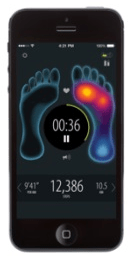
As expected, CES saw a bunch of new activity trackers announced, all of which should be for sale later this spring. First up is the Garmin Vivofit, pictured here, offering a curved always-on display and the usual step and sleep tracking functions. One different feature is adaptive goals, where once you hit a milestone, the goal for the next day is adjusted upwards to keep pushing you. Nice idea, but not so good for someone like me who runs five days a week and wants some rest days in between. I also don’t like the fact that it doesn’t have a rechargeable battery. While the disposable batteries are said to last around a year, it’s still wasteful.
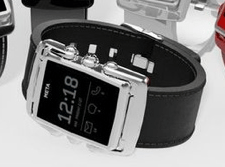
 Next up is the Wellograph, watch-like activity tracker that also includes a heartrate monitor. Unlike the Withings Pulse‘s heartrate monitor though, it appears this can monitor that data closer to real-time. It’s pricey at around $300 but does offer features in a form factor that’s different than the usual bracelet styles.
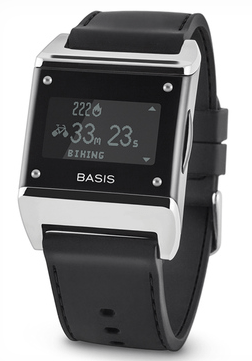
 Similar to the Wellograph, though, is the Basis B1, shown here, that monitors heartrate but also attempts to identify phases of sleep (light, deep, REM). It’s cheaper too ($200) and in my opinion, looks nicer.
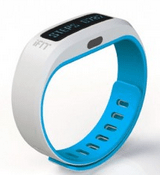
 iFit showed off it’s iFit Active band (also available in clip-on form, see link above), which promises to work with internet connected gym fitness equipment to help you track those activities. Of course, it also tracks steps and sleep, syncing the data to your smartphone.
LG’s Lifeband Touch is another me-too product, tracking activity etc in a bracelet-like form factor looking a lot like the Nike Fuelband.
 Last up is Mother from Sen.se…a product that bridges the connected self with the connected home. A central base station communicates with ‘cookies’ that detect location, movement, and temperature. In a sense, it’s like the activity trackers, in that each cookie can track steps taken and sleep, but it seems like there’s a lot of potential on the software side of things when a whole family of activity trackers is communicating with a central base station. When that base station can be programmed to send notifications or other actions based upon events, it could get interesting. What’s not clear to me is how useful the cookies would be if scattered throughout the house in stationary locations…there’s potentially a lot of data that could be collected this way. Imagine for example, if ‘Mother’ knows there is a person nearby a stationary cookie…and can see that cookie is reporting a low temperature…can it be programmed to interface with a Nest thermostat to turn up the heat in the house? Or if all the ‘person’ cookies are on one floor, turn down the heat to the other floors? Since cookies can communicate with other cookies, it does raise the potential of a very smart house…but this is heavily software-dependent so is theoretically possible, but also very easy to make it complicated and of limited use. Looks really promising though.
 Porsche showed off its new 911 Targa recently, and it features a very cool new top mechanism that brings back the look of the original, but with much greater simplicity (to the user, not to the car). Check out the video below to see it in action. At a price starting at $101,600 (and being a Porsche, options are numerous and expensive), the video might be the closest you get to one.