Over-consumption

No surprise here, but a recent article at phys.org talks about over-consumption on a global scale, how we’re consuming more than this planet can produce.  Think of it in terms of personal finance…we’re spending more than we’re making each money, and out savings account is going to run out (with no interstellar ‘banks’ to extend us credit!).

What I really found interesting though was the chart below, that illustrates how the carbon footprint of different food varies.  It’s amazing how bad cows are for our environment, especially compared to other meat options like pork or chicken!

Threatened water supply

There are a couple interesting threats to the security of our future water supply.  The first involves depletion of groundwater for agricultural uses.  Already, we’re using it at an unsustainable rate, and the future viability of irrigated agriculture is, at this point, somewhat uncertain in some areas.  However, as this article points out, there’s more that can be done using existing technology to decrease water usage, like more efficient watering methods (drip irrigation, for example) and construction of more water storage systems.  That takes money though, either with higher food prices, and/or government infrastructure investment.  In the current political and economic climate, the later is unlikely, so expect higher food prices to hit first before public pressure creates the political will to improve the infrastructure.

The second development that is going to place increasing demands on our water supply is electricity, strangely enough.  As this article explains, most modern power plants require large amounts of water in order to cool them.  Well, the power plants that aren’t using renewable energy like solar or wind, that is.

Then of course, there’s fracking, which not only pollutes the groundwater, but uses a lot of water as a primary ingredient in the fracturing fluid that’s pumped underground.  Sort of a double-whammy there.

So what does this all mean?  It means that like many other things, we’re nearing Peak Water, where the supply of water will be less than the demand.  Or rather, the supply of clean, drinkable water.  We’ll likely be forced to turn to more expensive filtering methods to increase the drinking water supply, and for coastal communities, it’s hard to imagine a world without desalination being key.  Costs will increase.

Peak Metals

You’re reading this on a computer or other electronics device.  Have you ever thought about what it took to build that device?  Materials were dug up from the Earth and processed into this amazing form you’re staring at.  Great, but this planet is finite in size…just how many more iPads can this planet provide the raw materials for?  How long until the metals we take for granted run out?  The infographic below attempts to answer that question, using data from the US Geological Survey.  Naturally, there are a lot of assumptions in this and the exact numbers may be off…but the underlying point is the same, that the metals and fossil fuels that we depend on for our first world lifestyles are running out, and we’re talking about a matter of only decades before we face critical shortages.  We cannot continue on this path of vast consumption…it simply isn’t sustainable.  Shown here are just a few examples, the more critical ones…though the same idea applies to anything we dig out of the Earth to use…resources are limited.

The cost of oil, part 2

As a follow up to my earlier post about the Cost of Oil, comes this article from the Huffington Post.  More facts, more examples, more of the same to many of you, but for those of you who aren’t quite convinced, check it out for yourself and see if it makes sense to you.  There’s a lot of talk in the media about the cost of oil, and discussions about different options for getting more of it (Keystone XL pipeline, drilling in the gulf, etc).  It’s worth realizing that these solutions will provide oil, but not CHEAP oil.  Or as the article above so nicely put it,

The simple truth of the matter is this: most of the world’s easy reserves have already been depleted — except for those in war-torn countries like Iraq.  Virtually all of the oil that’s left is contained in harder-to-reach, tougher reserves. These include deep-offshore oil, Arctic oil, and shale oil, along with Canadian “oil sands” — which are not composed of oil at all, but of mud, sand, and tar-like bitumen. So-called unconventional reserves of these types can be exploited, but often at a staggering price, not just in dollars but also in damage to the environment.

So what’s the answer?  Adapt.  Oil will continue to get more expensive and more rare.  We need to work hard to wean ourselves off of that addiction, for the longer we wait, the more difficult that transition will be.

The cost of oil

With the political season in full swing and our annual uptick in gas prices, there’s a lot of talk about how to lower the price of gas and oil.  The reality is really nicely summed up in this article at smartplanet.  The fact is, we’ve already tapped all the ‘cheap’, easily accessible oil.  While there are vast quantities of hydrocarbons still available to be extracted, the cost of doing so is quite high, and as a result, we’ll never have ‘cheap’ oil ever again.  Those new sources are also more difficult to get to (meaning more expensive).  This means that around 2014-2015, we’re expected to hit a point where global oil supply (production) decreases on a year to year basis.  Naturally, this is not going to be fun for those driving inefficient cars.  If you’re shopping for a new car, you’d be wise to consider the most fuel efficient model that you can for whatever type of vehicle you need!

It’s a really good article and worth the read, check it out here.

Peak Helium?

Bad news, kids…we’re approaching ‘peak helium.’  This rare gas is obtained as a by-product of the petroleum industry, and thanks to huge stockpiles this country set aside after WWI, supply has been plentiful.  However, those helium reserves are dwindling as demand exceeds production…once gone, expect prices to skyrocket faster than, well, a helium filled balloon.  The days of cheap helium party balloons are numbered…enjoy it while you can!  On the more serious side, this gas is incredibly useful for extreme refrigeration needed in many science and medical applications, so the impact will be far-reaching.  Read more over at the Guardian.

Water Shortages in the Forecast

Water supplies in our country are not only facing pressure from an increasing population, but climate change is likely to make the problem worse.  So bad in fact, that by 2050 more than one in three counties in the US could face either a high or extreme risk of water shortage.  Most likely, this will affect southern and southwestern states, and the southern Great Plains states.  Read more over at sciencedaily.

Peak Lumber

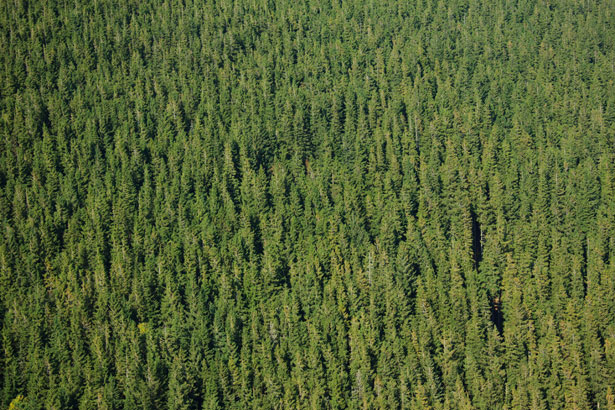
Well, not surprisingly, it turns out that lumber is not being harvested in a sustainable manner in the tropics, raising the specter of Peak Lumber in the future, when the demand will exceed supply.  The basic problem is one of greed…trees are being cut down faster than they can regrow.

Of course, this just treats forests like a resource to be exploited.  The concern about Peak Lumber doesn’t deal with the damage that destruction of habitats this can result in.  Logging can be done sustainably, but not when greed is allowed to drive decisions.

Read more about this over at the BBC, or check out Wikipedia for more on sustainable forest management.

Proudly powered by WordPress | Theme: Baskerville 2 by Anders Noren.

Up ↑