Food Scarcity

In the coming years and decades, you can expect more headlines like this one from Scientific American: “World Lacks Enough Food, Fuel as Population Soars.”  It’s a two-sided problem.  On the one hand, demand increases as more people move out of poverty and reach a traditional ‘middle class’ lifestyle.  On the other hand, the world population is increasing FAST, which compounds the first problem of increasing demand.  Perhaps this quote from the article sums it up best though:

Even by 2030, the world will need at least 50 percent more food, 45 percent more energy and 30 percent more water, according to U.N. estimates, at a time when a changing environment is creating new limits to supply.

So, what do we do?  Well, decreasing consumption is obviously a priority, and I hope that new technological advances can help reduce the amount of natural resources required to build products (but even then, there’s a finite limit to how much we can dig up out of the Earth…society will need to incorporate virtual reality into our lives if we are to hope to achieve balance).  In the meantime, the UN’s panel on global sustainability recommends managing water and marine ecosystems more efficiently (they’re both key to food supply) and increasing affordable sustainable energy.

You can read the panel’s full report here.

Buying Organic Food

So, let’s say you want to start eating healthier and buying organic foods. Where do you start? They’re more expensive, so it can be tough to go 100% organic. This video serves as a starting point, which foods offer the most ‘bang for the buck’, or as the video title’s puts it, ‘The 13 Most Toxic Foods‘ (not because of the food’s toxicity, but because of the chemicals added to them).

Palm Oil Biodiesel – not green

The EPA has ruled that biodiesel made from palm oil does not meet US standards for being defined as a renewable fuel, due primarily to the fact that the palm plantations are often created by clearing out the rainforest that once thrived there.  It’s a nice reminder that when you see something being touted as eco friendly or using tagwords like this ‘biodiesel’, we need to look at the whole picture and not just accept it as green (this can be a form of greenwashing – tricky marketing to make you think that something is eco-friendly when it isn’t).

Bud Nip

So I know I talk a lot on this blog about how we can use technology to solve the problems that our society creates, but we need to remember there are boundaries to that. I feel that using technology to improve our lives is great, but altering the chemical balance of our environment and our selves is generally not a good idea. One great example is the chemical Chlorpropham, also known as ‘bud nip’. It’s sprayed on a variety of vegetables to extend their shelf life and prevent, for example, potatoes from sprouting. Other vegetables sprayed by this are blueberries, carrots, onions, spinach, tomatoes, beets, and cranberries (and many others…). Like many chemicals, this is shown to cause all sorts of health problems in lab experiments (see link), but we’re told that low doses are OK. The problem is, if we inject our bodies with low doses of a wide variety of chemicals form all sorts of different exposures in our daily lives, how can we believe that would be safe?

The solution, in my opinion, is to minimize the amount of unnatural chemicals we put into our bodies. Eating organic food is one great place to start, or better yet, grow your own!

Here’s a great video of an experiment done by a kid about this:

Fracking, and water contamination

There’s been all sort of discussion lately about fracking (hydraulic fracturing of shale rock) to access natural gas that was previously thought to be inaccessible. The concern has been over the fluids used in the fracking process, what little we know about them indicates they are toxic and not something we want in our groundwater (the actual ingredients are considered trade secrets and not typically disclosed, though Colorado recently enacted a law to change that). Evidence has shown these fluids can turn up in groundwater. On the other side of the debate though, the industry disputes that claim and says that fracking is safe, that the fluids can’t go from the shale layers to the aquifers. Which side to believe? An article in Scientific American indicates that both sides may be right, depending on your point of view. It’s an interesting and short read and I encourage you to read it in full, but the gist of it is that yes, fracking doesn’t contaminate the water, but the wells that carry the fluids to and from the fracking layers CAN. Cracks in the cement casings of those wells can allow the fracking fluid to escape into the aquifers that the wells pass through to get to the fracking layers. More to the point, this concern would apply to virtually any time of natural gas extraction, not just fracking. So, it’s a bit worse than originally feared! Read more about it here.

Hyperion Solar Updraft Tower

Hyperion Energy is looking to build a gigantic, kilometer tall tower in Australia.  Where it really gets interesting is the ‘why’.  The base of the two has holes in it.  The land around it, for almost fourteen square miles, would be covered, creating an air gap between the ground and the cover.  The sun would heat up the air under the cover, and hot air would rise up through the tower, drawing in cool air from the perimeter of the cover.  Turbines installed in the base of the tower would be turned by the rising hot air, thus generating electricity.  Perhaps the best part is since this operates on a temperature DIFFERENCE between the ground air and the air at the top of the tower, when night falls this will continue to generate electricity as the ground will retain heat while the air above the tower cools down.  Natural power storage.  So, not only is this clean, renewable energy, but…the plant pictured here would produce about as much electricity as as small nuclear reactor (200MW)!  Awesome!  They’re hoping to get this build and operational by 2014.


Hyperion Energy from Hyperion Energy on Vimeo.

What to expect from our changing climate

The scientific consensus is clear – humans are responsible for global warming.  The political consensus is likewise clear – we’re not going to do what it takes to avoid significant climate change.  So, we must face the reality of this world we’re creating.  What can we expect?  The Intergovernmental Panel on Climate Change (IPCC) has a report summarizing what our children will have to deal with as they grow up.  Things such as stronger storms, hotter and longer heat waves, higher temperatures, and more precipitation.

It’s a shame that we can see this happening around us and see where our current path will lead, yet lack the willpower to alter this course.  It will be up to the scientists and engineers to help our society adapt to this changing climate.


Community Solar Garden

SunShare is doing something cool in Colorado Springs…they’re making it really easy for individual homeowners to reap the benefits of solar panels, without having to install solar panels on their own homes.  SunShare is building a ‘solar garden’, where individuals can lease a minimum of two solar panels.  The electricity from those panels is fed into the city’s power grid, and the leases then get a credit on their electric bill corresponding to how much power their panels produced.  You can read more about how it works here.

There’s something similar in Sacramento, CA, with SolarShares.  The big difference I can see is that instead of committing to output from a specific number of panels, it’s a less specific monthly fee that you pay the company.

Peak Lumber

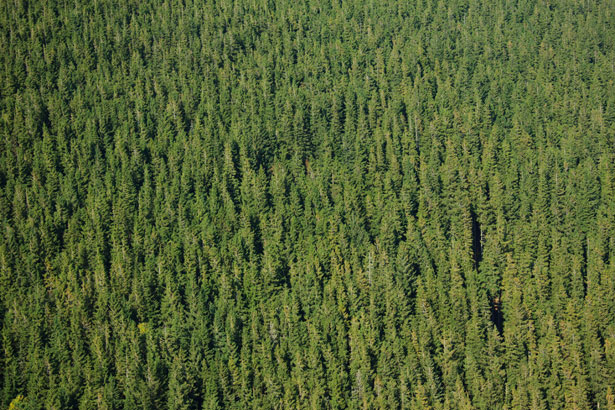
Well, not surprisingly, it turns out that lumber is not being harvested in a sustainable manner in the tropics, raising the specter of Peak Lumber in the future, when the demand will exceed supply.  The basic problem is one of greed…trees are being cut down faster than they can regrow.

Of course, this just treats forests like a resource to be exploited.  The concern about Peak Lumber doesn’t deal with the damage that destruction of habitats this can result in.  Logging can be done sustainably, but not when greed is allowed to drive decisions.

Read more about this over at the BBC, or check out Wikipedia for more on sustainable forest management.

iBook Author

Well, Apple has done it again.  Today, some people would say they made it easier to put textbooks onto an iPad.  I say those people are not seeing the full picture.  What Apple has done is to modify the textbook and classroom model that has been essentially unchanged for hundreds of years.  They’ve adapted that model to today’s technology, in a way that facilitates creation, access, and usage of this new medium.  After poking around it a bit and getting a closer look, I’m convinced that this new approach is far superior to the traditional teaching method.

The question now is, will it be adopted?  A resounding ‘yes’, if you ask me.  The ONLY downside I see is the cost to equip each gradeschool student with an iPad.  However, even before this new textbook concept, some public schools have already been doing just that (like Manitou Springs in Colorado).  Even in times of decreasing school funding, the schools are being challenged to be more innovative, more resourceful, more efficient, and more effective…and this presents a very compelling argument for them.

What a fantastic age we live in.

Proudly powered by WordPress | Theme: Baskerville 2 by Anders Noren.

Up ↑